Cultural placess - Jaffna Nallur Region
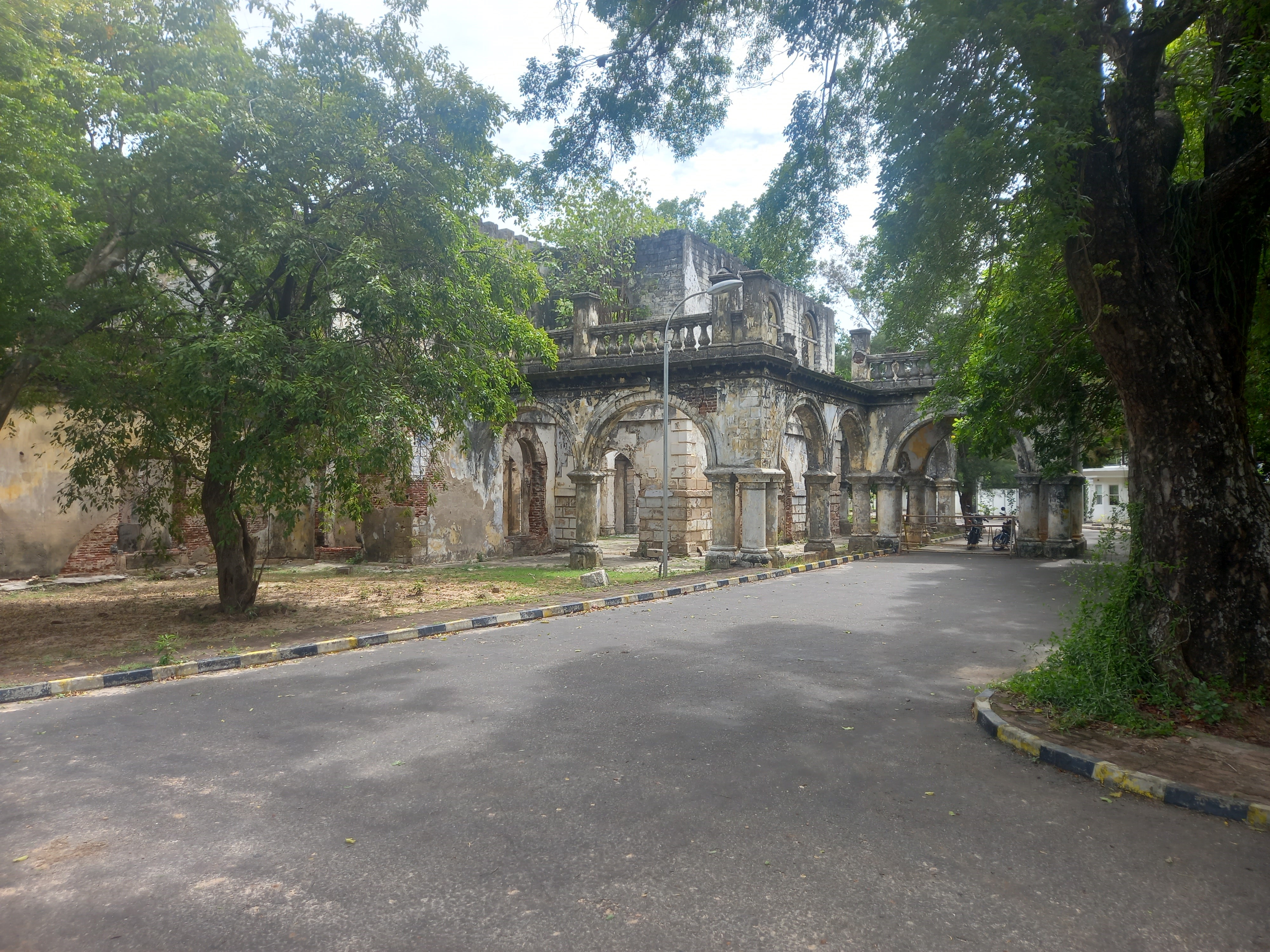
Jaffna Old Kachcheri
( Historical building and Archeological Monument )
Location : Chundukuli
Jaffna Old Kachcheri is considered as an important monument and located on the premises of old park near the Governor’s office and Jaffna District Secretariat. This building was constructed in the British period and Mr. Perival Ackland Dyke (1833-1867) is the responsible person in constructing this building for administrative purposes. When he was the Government Agent, he had constructed this administrative building. He has purchased a 27-acre land and developed his resident building with garden. This building represents British architecture.


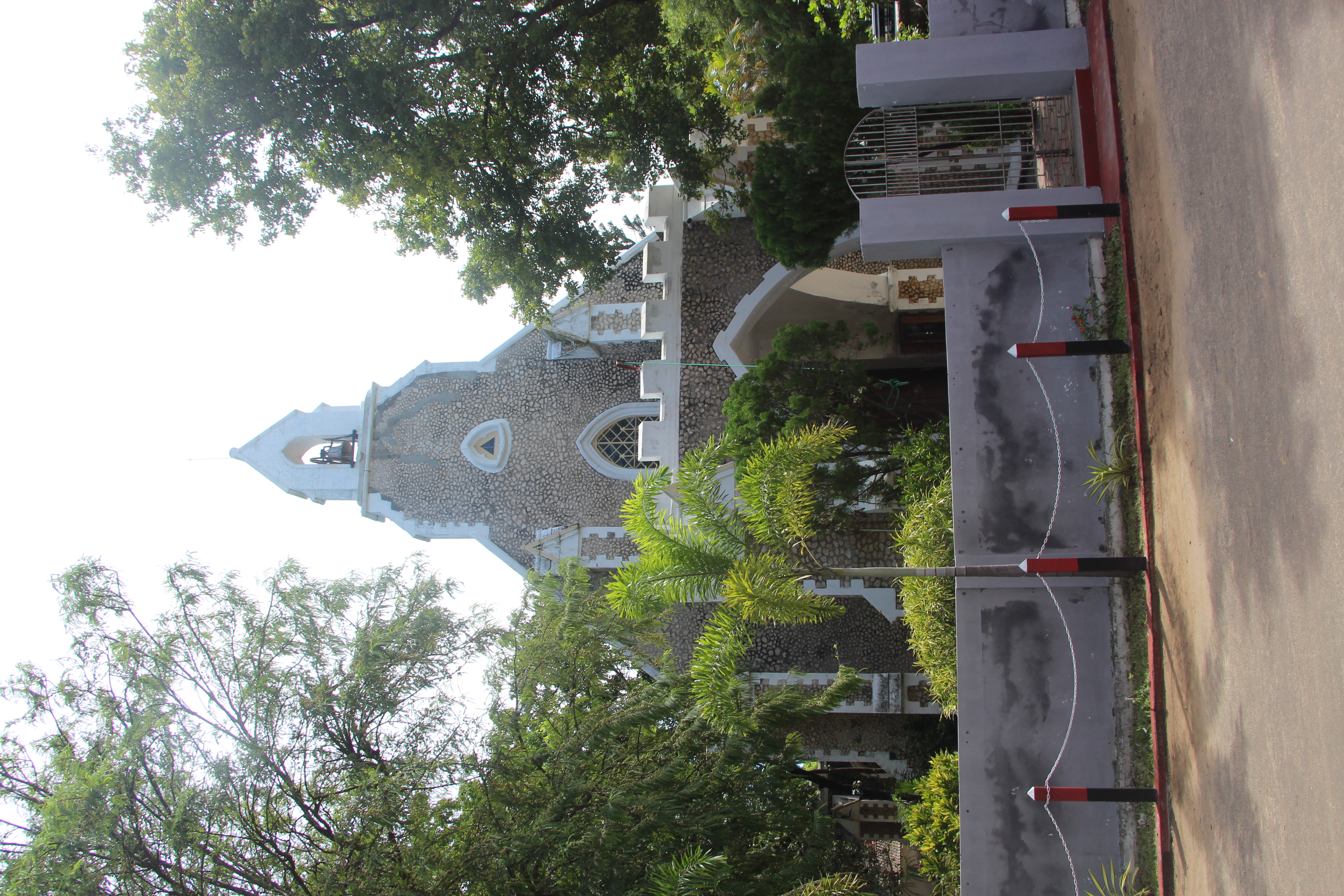
St. John, the Baptist’s church
( Religious Place )
Location : Chundukkuli
St.John,the Baptist’s church is a first Anglian church in the Island. Missionary REV. FR. Christian David (State Preacher) arrived on February, 1801 from India and first divine service was started in 1801. The Governor attended a service at this church in 1802. It was erected and dedicated at the present site. This church was extended in 1964 and it was renovated two times after the civil war in 1997 and 2001.

Stage for civil defense siren
( Historical building )
Location : Chundukkuli
Stage for civil defense siren is situated in front of Jaffna St. John College. A civil defense siren is used to provide emergency warning to public of approaching danger of aircraft attack during the Second World War II period. When Singapore fell to the Japanese in February 1942, Sri Lanka became a central base for British operations in Southeast Asia, and Trincomalee Harbor was an indispensable strategic bastion for the British Royal Navy, it was an irresistible military target for the Japanese. Hence Trincomalee harbor area was targeted by aircraft attacks. During the period British Colonial Government had established this kind of emergency warning center in the country. This siren was acted as alarming center to alert the Jaffna East area.
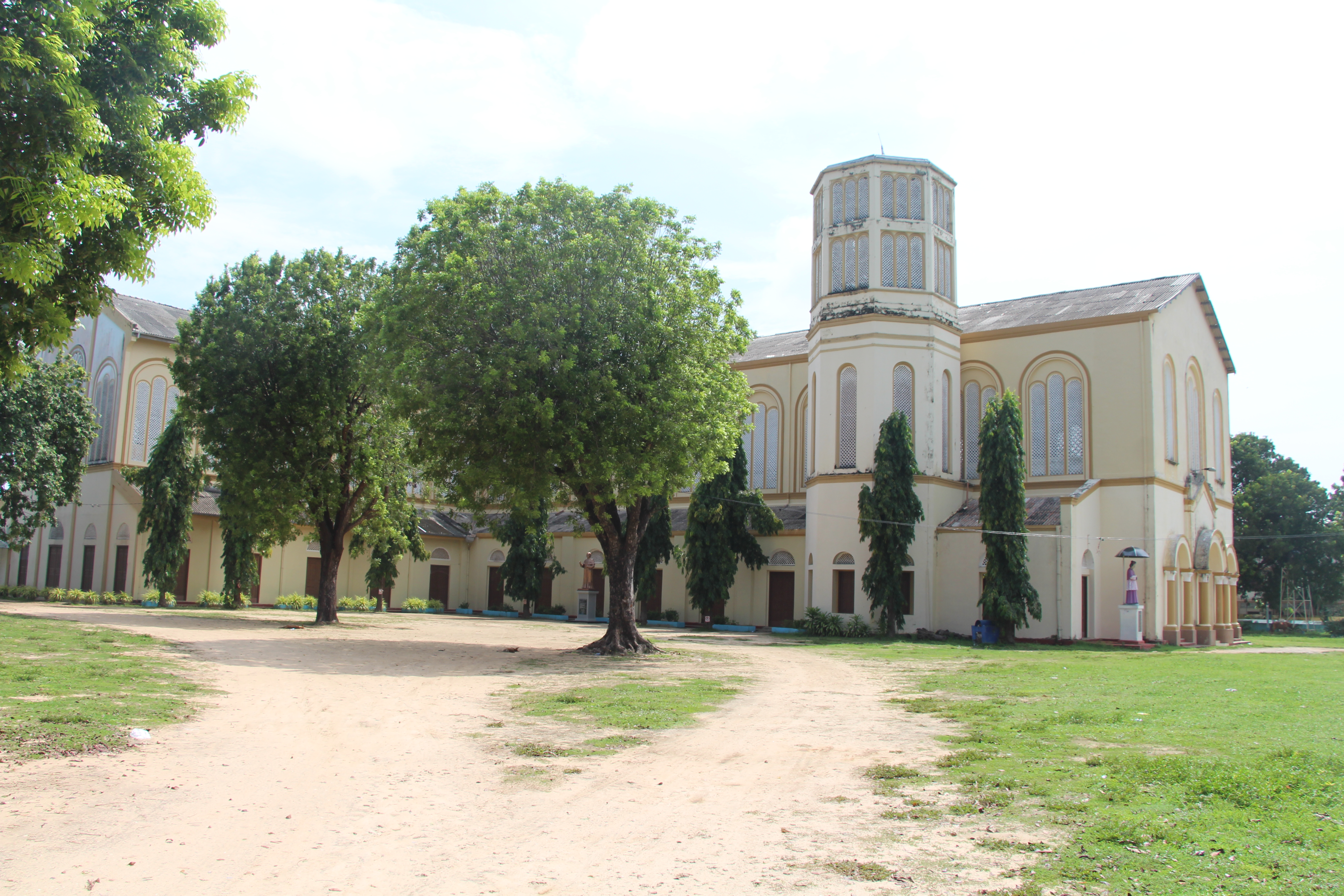
St. Mary’s Cathedral church.
( Religious Place )
Location : Jaffna Town East
St.Mary’s Cathedral church is a catholic church which is situated at Cathedral Road in Chundukuli South. King of Jaffna Cankili I killed his son at the location of the present cathedral after his son converted to Catholicism. The prince`s ashes were buried at the spot where he was killed and a chapel, which later served as the foundation for the construction of the present cathedral, was built.
It was constructed in 1794 and was built on the side of a thatched house that had previously served as a worshiping place for Jaffna’s Catholics. The church has fourteen novenas. The ancestor’s novena gifted land for the church.
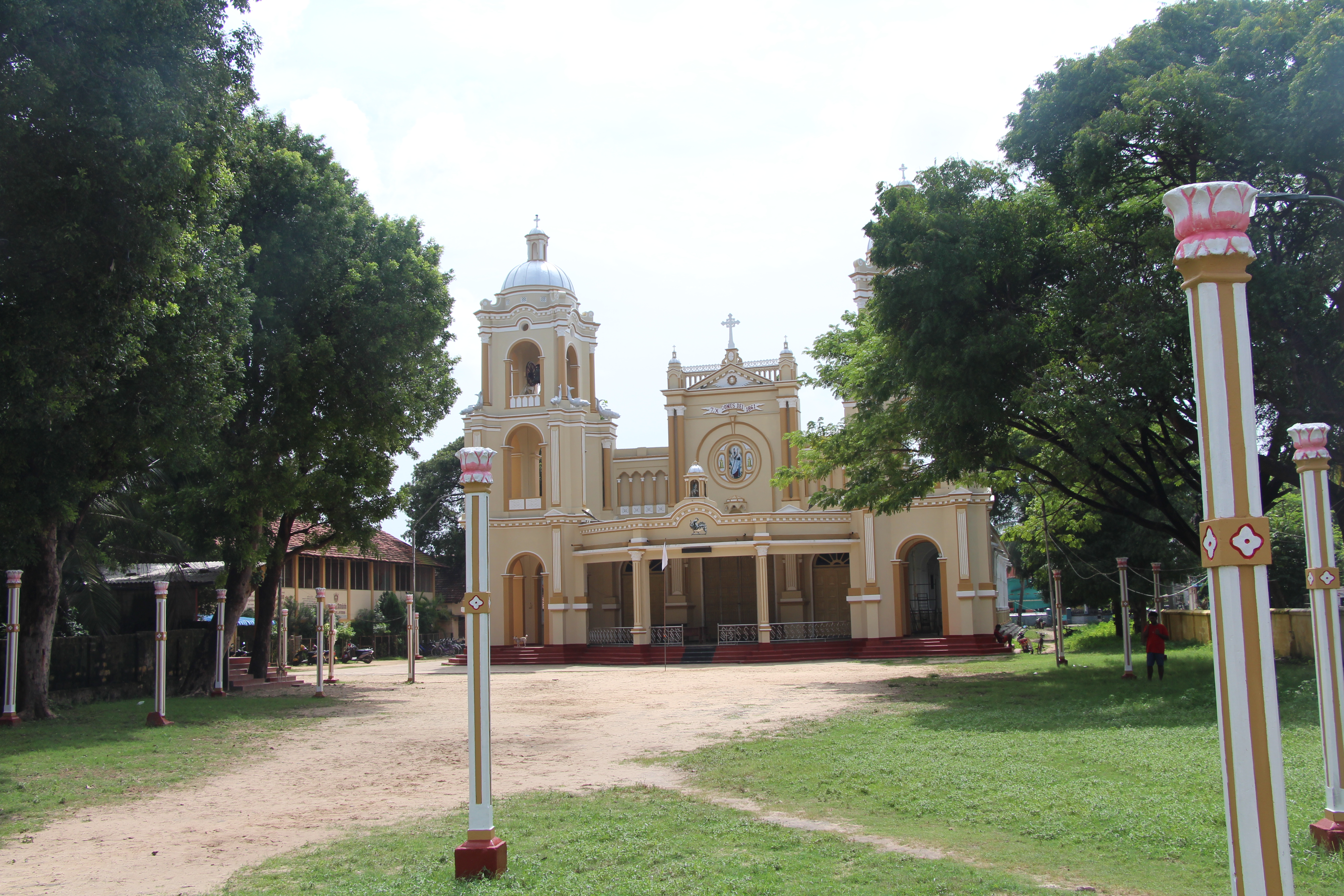
St.James church Jaffna
( Religious place )
Location : Mainstreet, Gurunagar
St.James church is located near to A-9 Road,Gurunagar,Jaffna .Foundation stone was laid by Rev.Fr.Loyoromaruwa and massive church was built by the help of 80 families who lived around the area in 1861.A church was constructed as temporally in 1624 and it was considered as “Gurukulam” by the Gurunagar community. The church architecture was based on the Roman archeological style. 24 wooden pillars were brought from Mullaithivu, and lime stones used in the steps which were brought from Galle. The length of this church is 232 feet and width 81 feet.
O.L.R church (Our Lady of Refuge)
( Religious Place )
Location : Jaffna Town
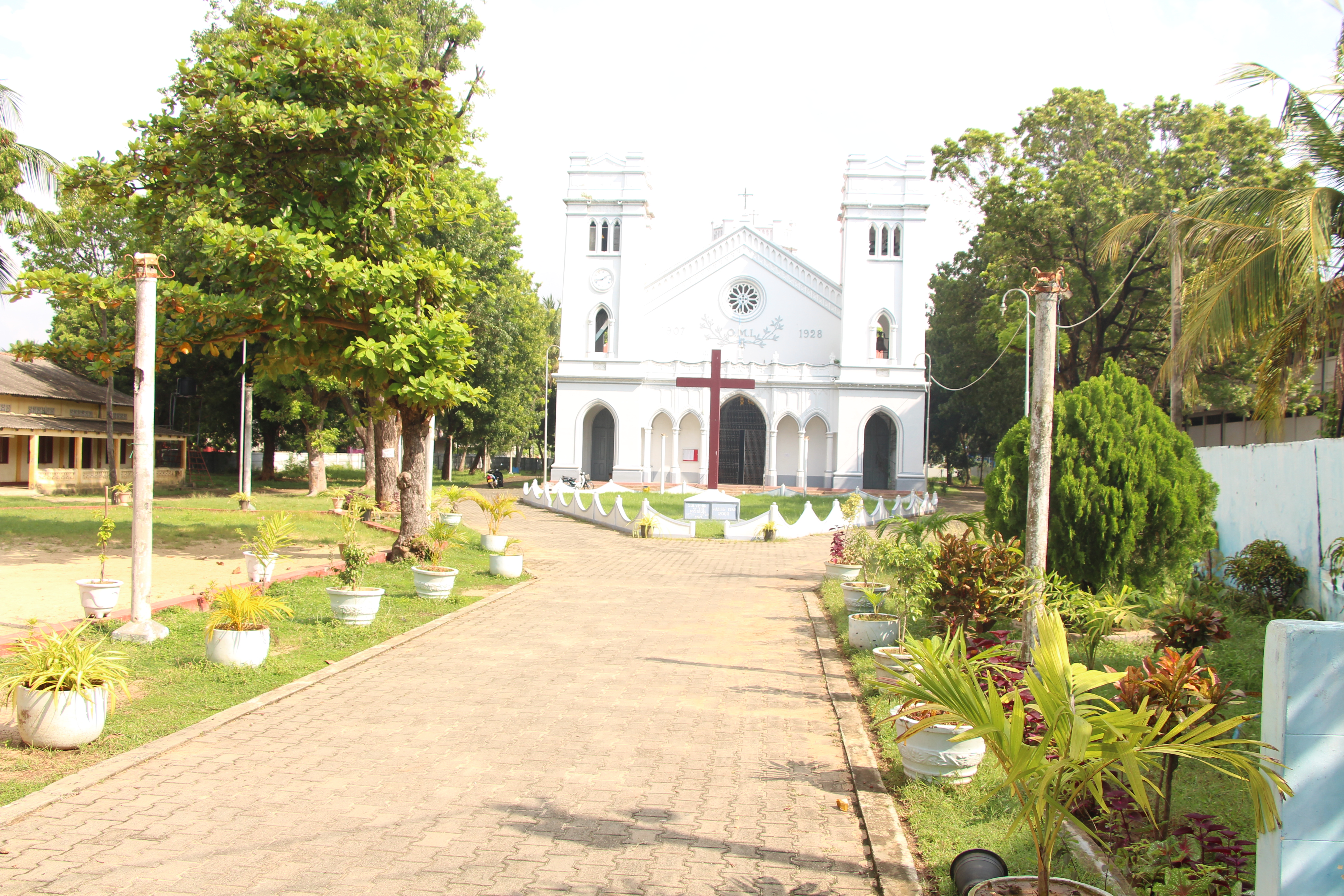
The church is situated near to Vempaddy Junction in the Hospital Road. Construction work of O.L.R church was started from 1783 to 1802 period and completed in 1828 by Rev.Fr. Lobo. The Church and the surrounding were used by the Jaffna Bishop during in 1848. In this premises the St. Patrick’s College was first started. In 1873 a Tamil school was established in the church premises. The church was renovated on 08-09-1928. Every year Church Feast is celebrated on august 30th.
Jaffna Dutch Fort
( Historical building and Archeological monument )
Location : Jaffna Town
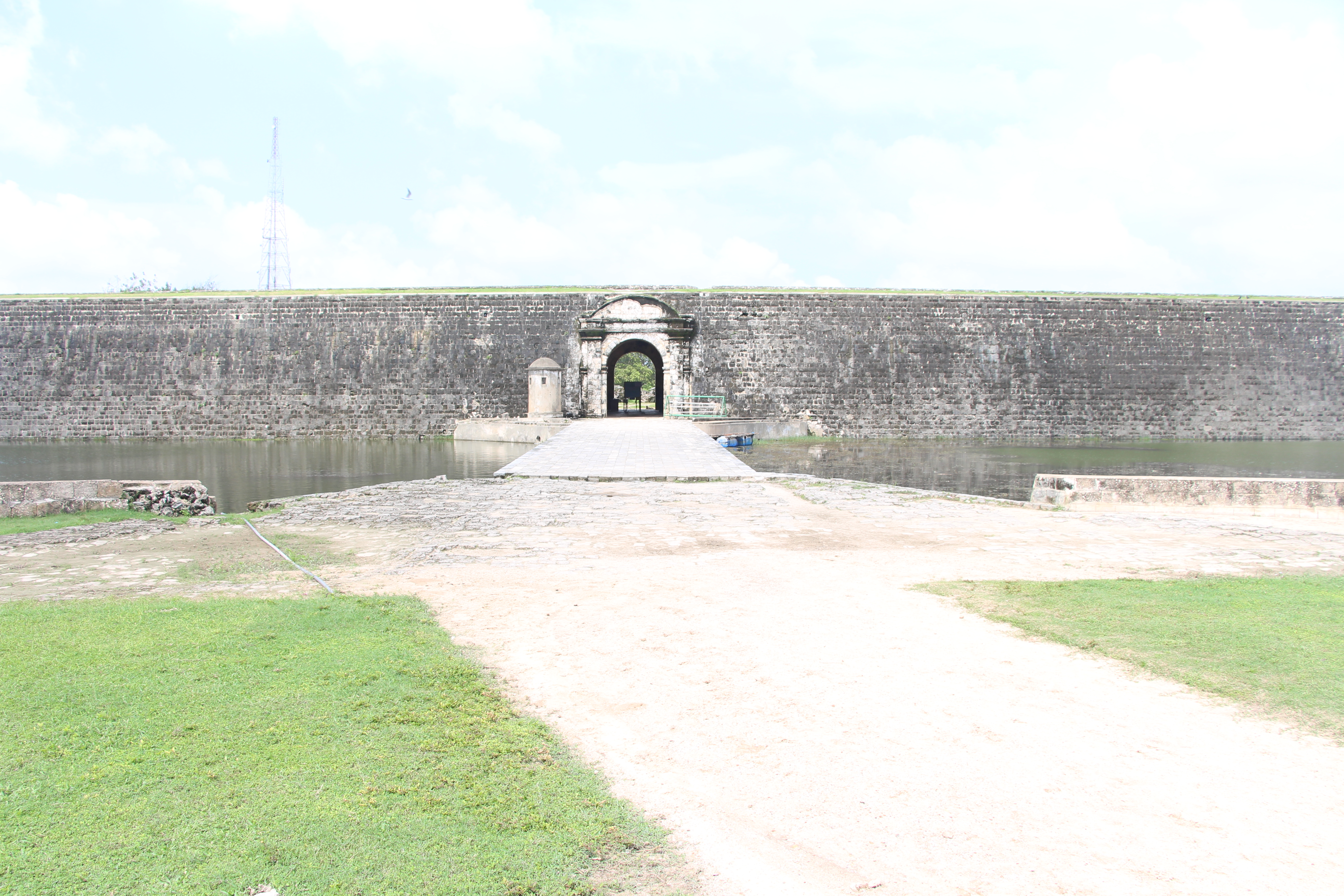
Jaffna Dutch Fort is historical evidence for colonial period regimes & it is built by the Portuguese at Jaffna in 1618 under Philip De Olivera when they invaded Jaffna. Dutch had captured it in 1658 and changed it as pentagonal shape Then British captured in 1795, and kept till 1948 as Administrative building, police divisional office, Punishment place, Queen’s house, and the Garrison Parade Ground. It was destroyed partly during the war and renovated partly and maintained by Department of Archelogy after it was declared as archeological monument.
Fort Muneeshwaran Temple).
( Religious place )
Location : Jaffna Town
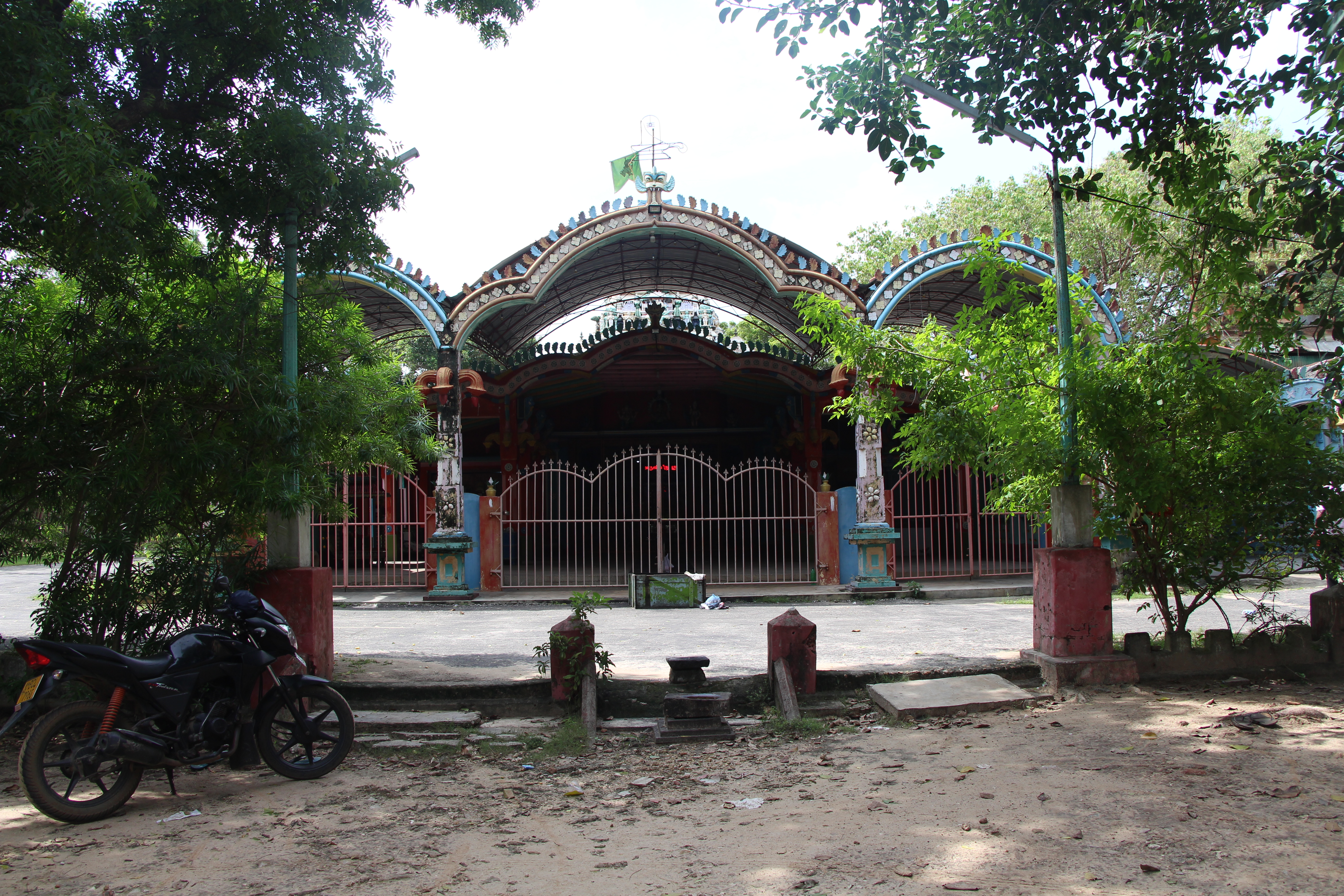
Muneeswaran temple is historically important temple in the Jaffna and located near the Jaffna Fort and Public Library. Major tree (Thalavirudsham) of this temple is Bo-tree (Arasamaram). It is stated that before building the Dutch Fort,It was located at the place where the Jaffna Fort is located presently. Then the Kovil was demolished, and the said Fort was built at that place. It was built at adjoining place of the Fort by the devotees and was prayed as a Guardian deity by them. According to the constitution of Kovil Mahasabha 1999, the administration of the Kovil has been administering by private persons for their generations. It was administered by Mr. Kanapathy Kandiah by 1916 then his son Mr. Kandiah Rajasingham administered it. Mr. Kandiah Rajasingham has no heirs. Owing to that presently his son in law names Mr. Mayilvaganam Gnanasegaram administers it. At the beginning the Kovil was found as a small hut Kovil then it was renovated with the contribution of many devotees for the worship of the devotees.
Public Library
( Historical building )
Location : Jaffna Town
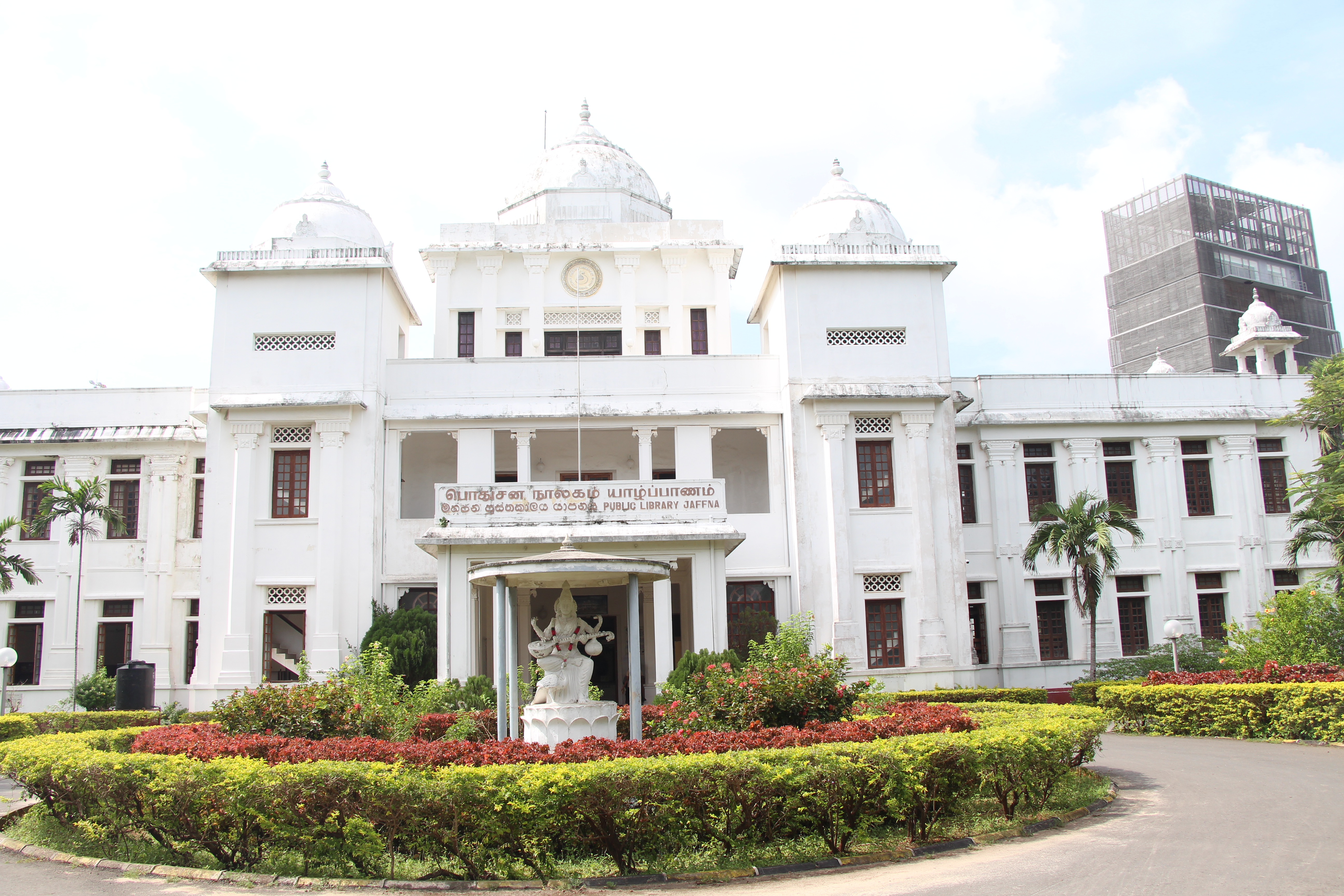
Public Library is a most notable library in the Northern Sri Lanka.This library was built in 1933 and burnt in 1981 due to ethnic conflict. The architecture of this library was the style of Indo-Saracenis style which was designed by Narasinhan from Madras. It contained 97,000 books & manuscripts in 1981.During the 1981 period, it was considered as one of the biggest library in Asia.It was renovated and opened in 2004 and It is being managed by Jaffna Municipal Council. Currently, It is seemed to important landmark and used by many citizens of Jaffna and Northern Province.
Jaffna Cultural Center
( Culturally Important place )
Location : Jaffna Town
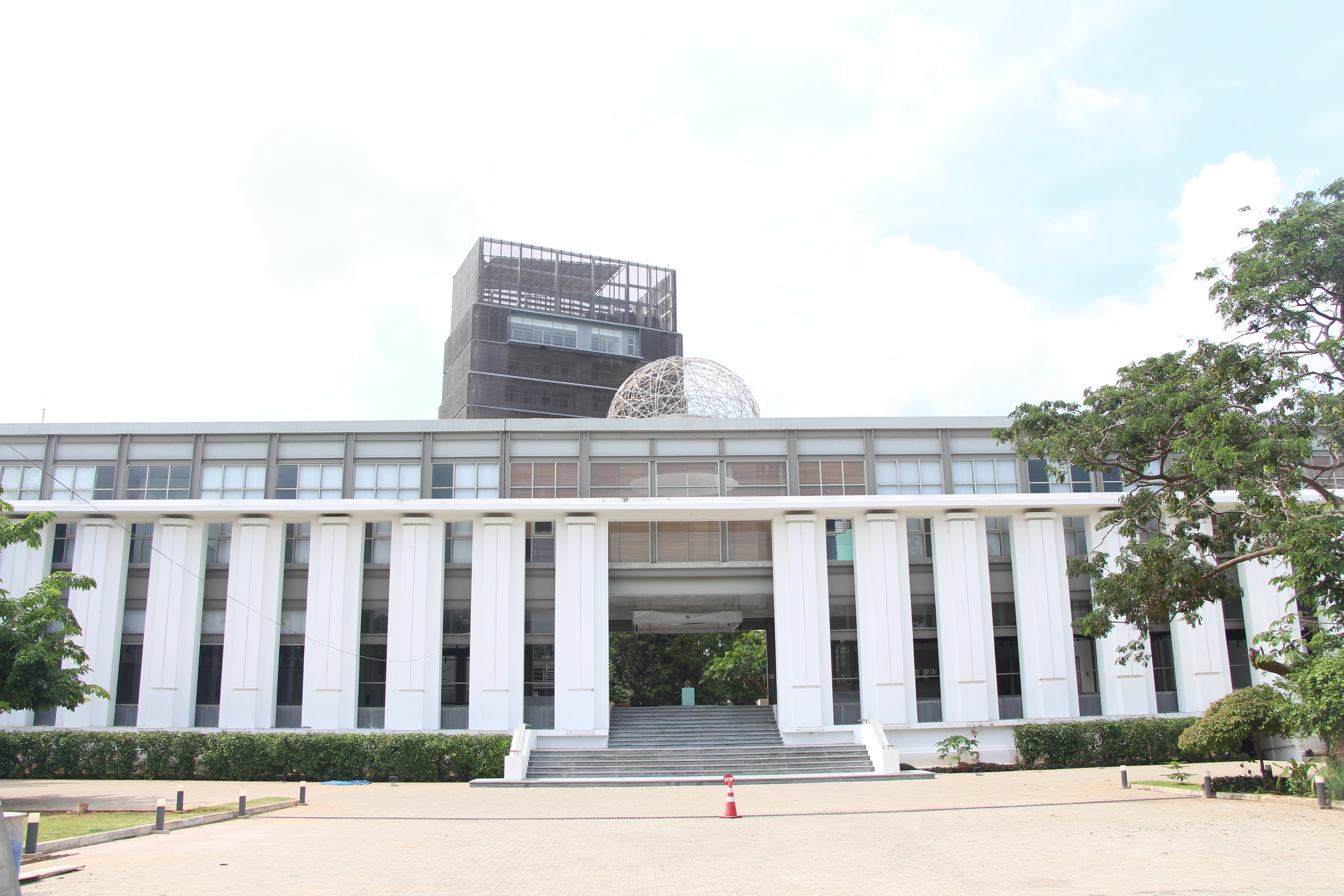
Jaffna cultural center is a prime center & serve as a hub of cultural activities and situated near Jaffna Public Liberary in the Jaffna Town. It has been built at an estimated cost of US$11 million by India. The agreement between High Commissioner of India, Mr. Y.K. Sinha and Economic Development Ministry of Sri Lanka in 2014 was signed. The purpose of this Centre is to help the Jaffna people to reconnect with their cultural roots as well as to the rest of the country and to rejuvenate and nurture the ancient cultural heritage of Jaffna. It covers 11 floors and facilities, which include a conference hall-cum-seminar room, an amphitheater, a multimedia library with online research facilities, exhibition and gallery space, and an auditorium that can accommodate around 600 persons,for culture and arts to flourish. It was virtually opened on 28.03.2022 by Indian Foreign Minister Dr S. Jaishankar and Sri Lanka’s Prime Minister Mahinda Rajapaksa.
St. Peter’s Methodist Church
( Religious Place )
Location : Jaffna Town
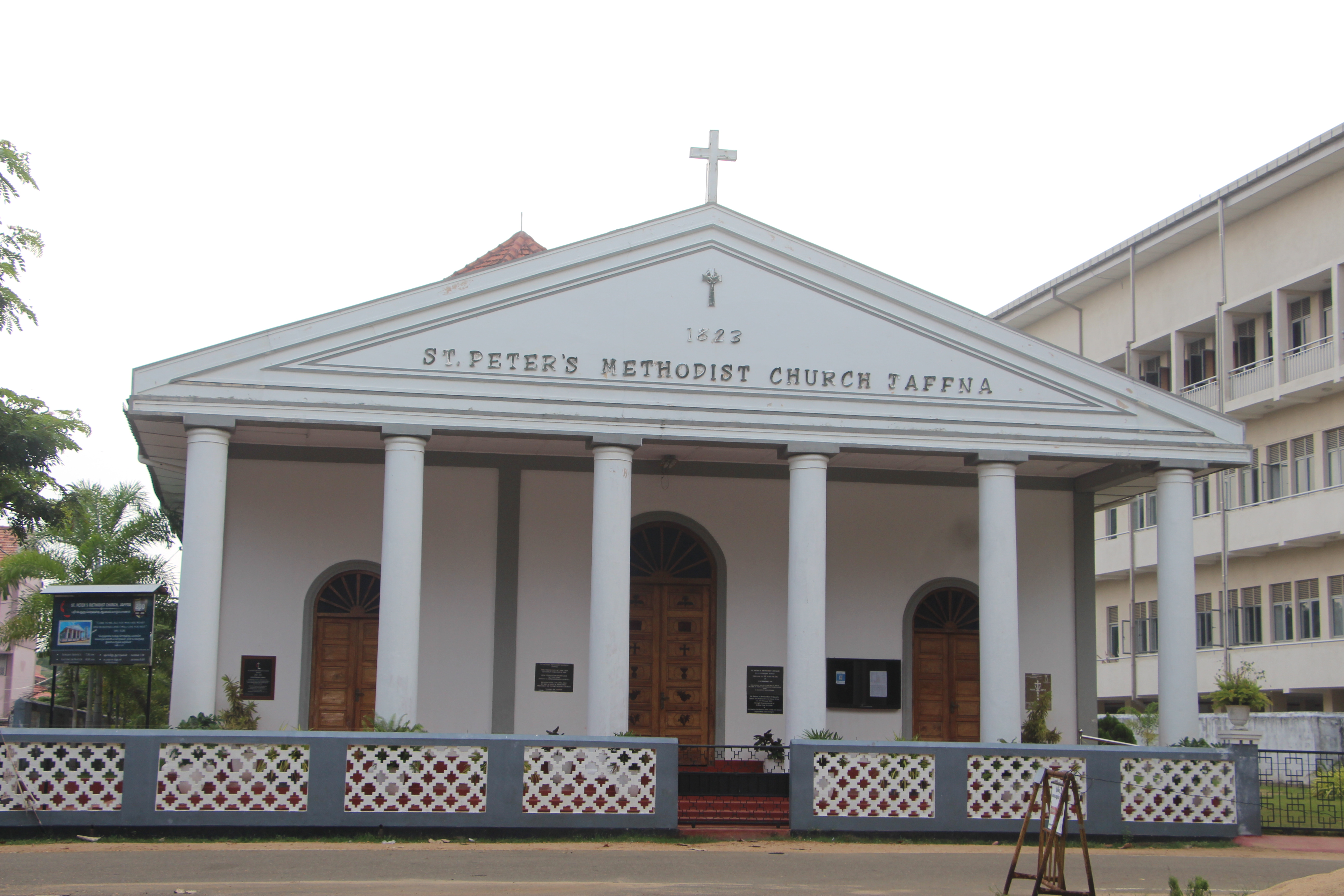
The Methodist Church is situated at the middle of Jaffna Town and in front of Jaffna Public Library. According to the methodist’s movement of Wesleyan in the late 18th century, 1814 five missionaries landed in Galle fort. Then On Thursday, The missionaries, namely James Lynch and Thomas Squance started to their journey to Jaffna on July 14. Rev.James Lynch came on August and was the district chairperson took chairpersonship in Ceylon. They have decided to build a church in Jaffna. On January 20, 1821, it was proposed to build a church with all amenities, hard work of the Rev. Joseph Roberts, laid the foundation stone for the church on June 1,1821. The dedication of the church took place on Wednesday, February 19, 1823. It was damaged in 1996 due to civil war. After, superintendent minister of Jaffna circuit Rev. K.Karunasekara laid that foundation stone for the new church, on January 14, 2001. The church was rededicated by Rev. Noel. P. Fernando – President of the conference Methodist church Sri Lanka, on April 13, 2004.
Jaffna Clock Tower
( Monument/Historical building )
Location : Jaffna Town
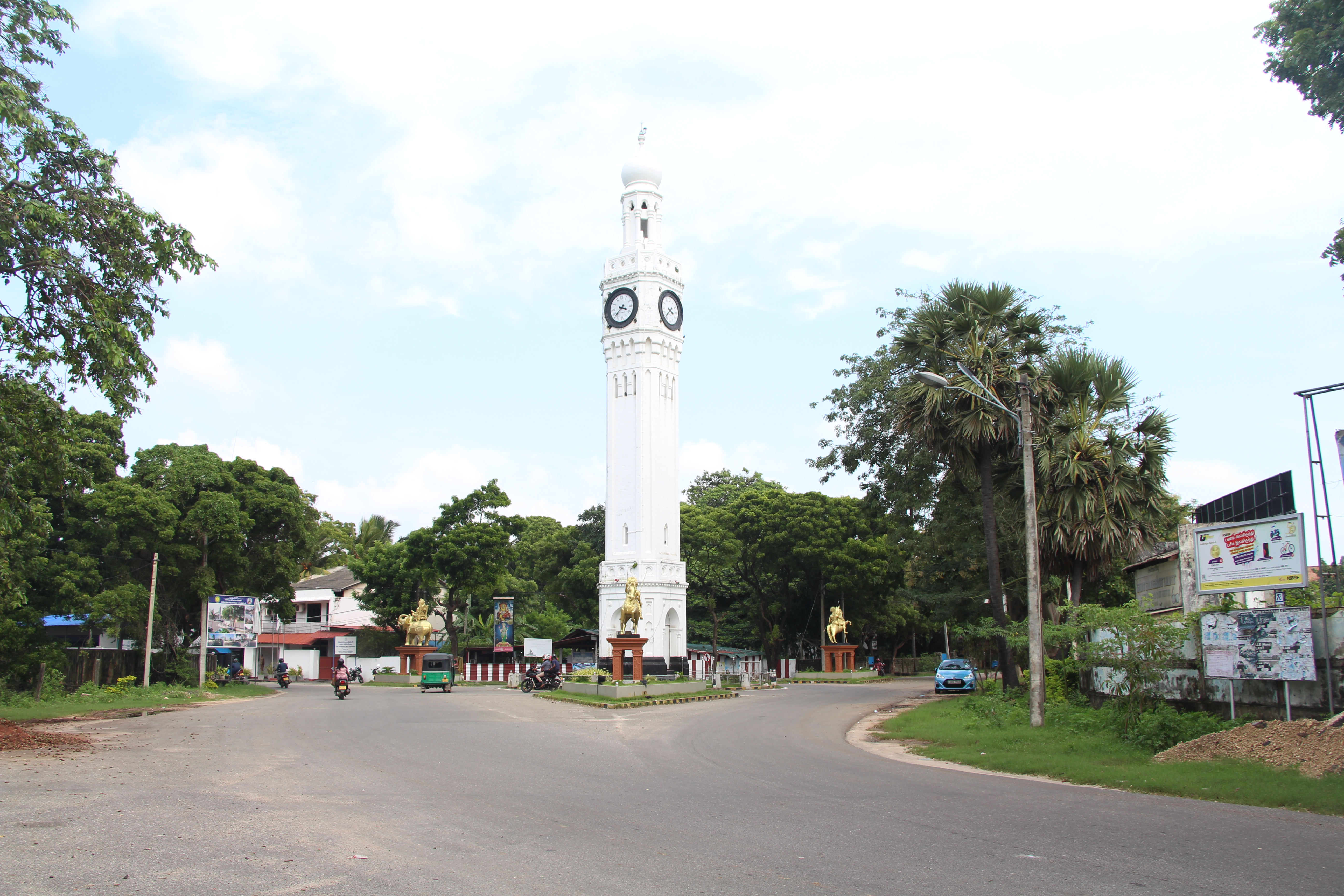
The tower is situated at Mahathma Ghandi Road near to Jaffna Public Library. It was built for the memorial visit of prince of Wales Mr.Albert Edward to Jaffna in 1875. The tower was designed by Government Architect Mr.J.G.Smither. It was constructed between1880-1882 period. The clock was donated for this tower by Governor James Longden. Then clock bell is dated in 1882. It was damaged by civil war and renovated with the British assistance. Prince Charles had donated digital clocks in February, 1998.reopened by High commissioner Linda Duffel on 19. June, and 2002. Tamil kings’ statues such as Bandara Vanniyan,Ellalan and Pararajasinkan have been reedited around the tower by Minister,K.N Dougles Devananda in 2013.
Jaffna Jimma Mosque
( Religious place )
Location : Jaffna Town
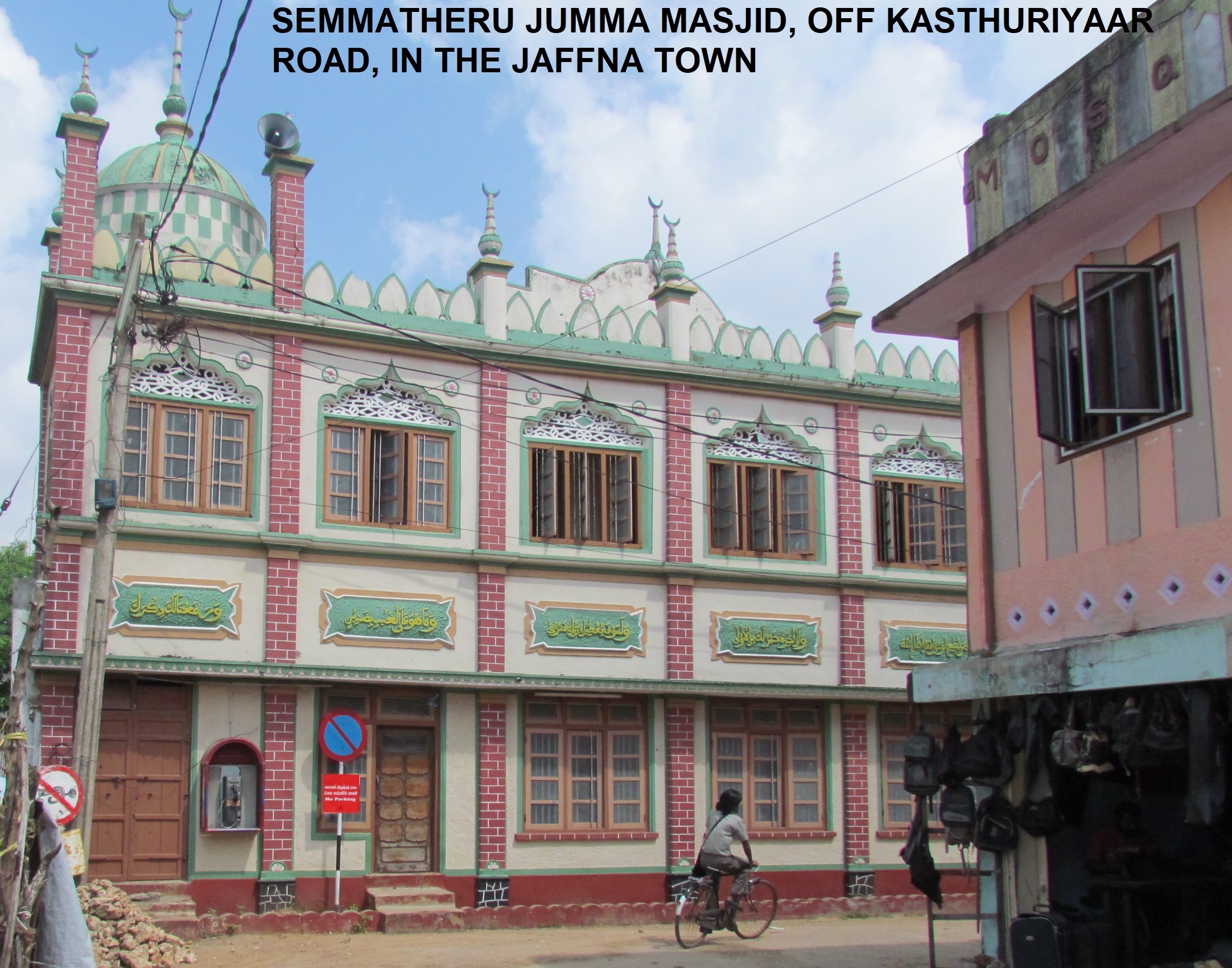
It is a most popular in the Jaffna Town. Muslim community is living in the western part of Jaffna town. This mosque had been constructed in 1868 as Madam. Then the committee was formed and constructed mosque in the 1962 and it was elaborated and renovated recently. It is largest mosque in the Jaffna and whenever many Muslim people in rest of the district come to Jaffna, they visit this mosque.
Kathiresan Temple
( Religious place )
Location : Jaffna Town
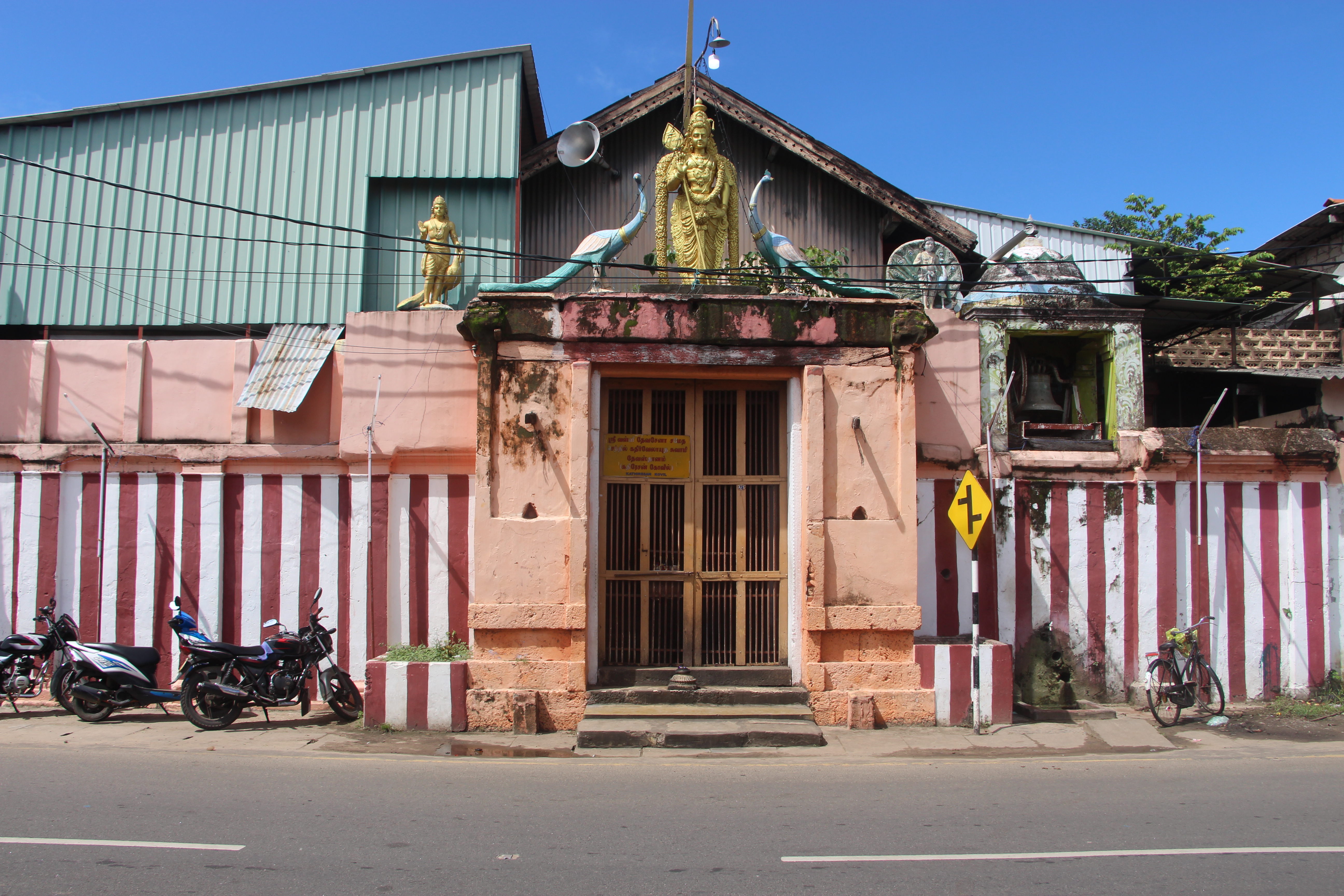
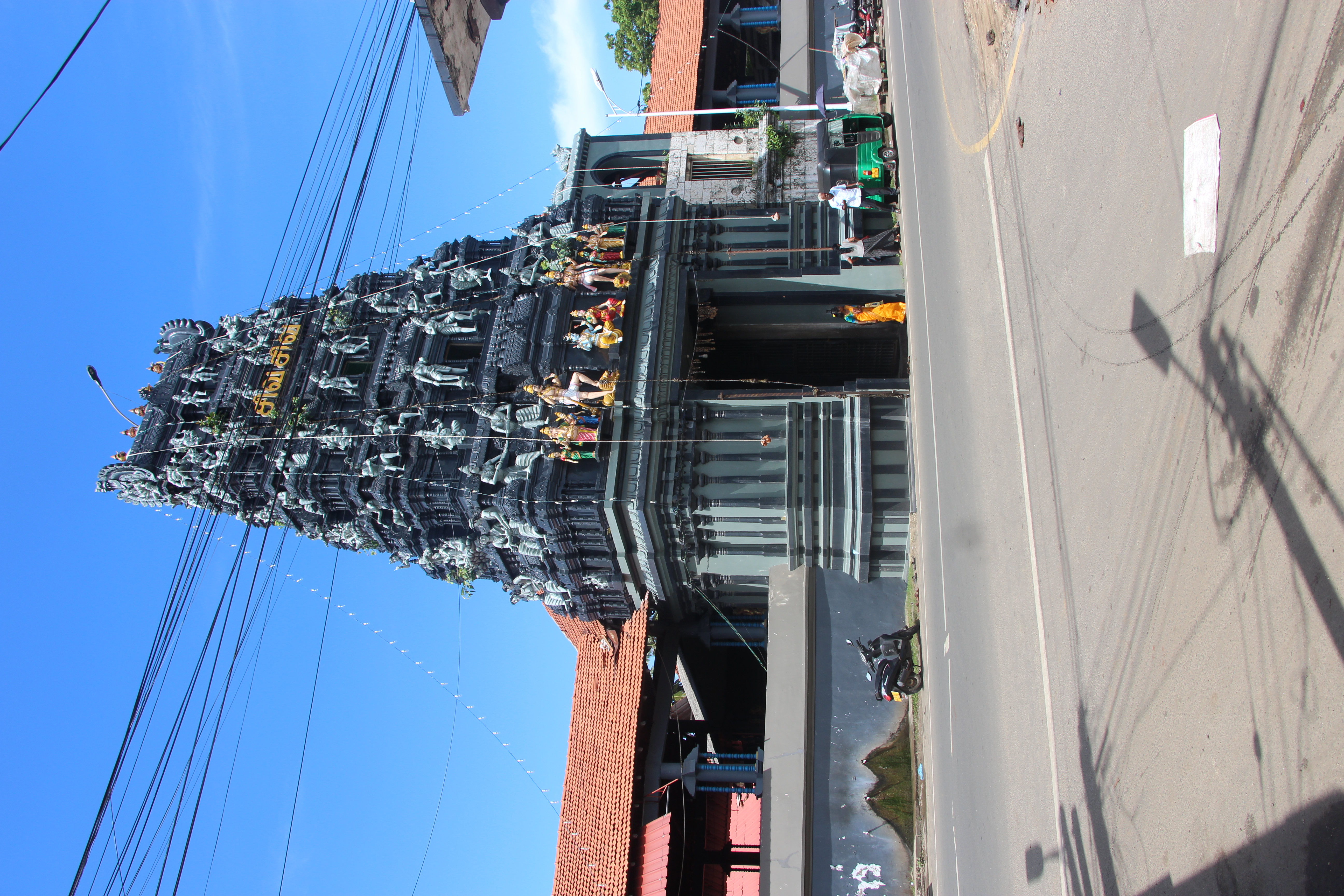
Kathiresan temple is situated near the Vannai Vaitheswaran Temple, K.K.S Road, Jaffna. It is a Hindu temple, and the prime deity is Loard Murugan. It is believed that Chettiars of India who went all four directions of the world for trading activities and built their clan deity Kumaran in the shape of Vel for their eternal rest wherever they went. In this way, the Chettiars of Naddukoddai city who came to Jaffna, Mr.A.M .a.Arunachalam Chettiar, Mr.A.K. Nachiappan Chettiar, Mr. P.V. Palaniyappan Chettiar, Mr. K.P Chellapa Chettiar, Mr. K. Narayanan Chettiar, worked as Trusty Members and built a monastery here in 1879 with excellent wood work, established Kathirvelayuthaswamy in the shape of Vel and worshiped it. Then, Mr. B.K. Pairavan Chettiar, Mr.P.K.N. Nagappan Chettiar along with others decided to build a Kovil to Kathirvelayuthaswamy by black stone; they brought sculptors from India and built Sanctorum, Artha Mandapam and Maha Mandapam with beautiful carving sculptures. They established Sri Kathirvelayuthaswamy completely in 1936 and worshiped.
Vannai Vaitheeswaran Temple
( Religious place )
Location : Jaffna Town
It is a popular Hindu temple and a monument in Vannarpannai, Jaffna. It was constructed by Vaitheeswara Chettiyar during the Dutch colonial period in 1787. Major God of this temple is Vaitheeswaran(Lord Shiva) and Goddess Thayalanayagi Amman. Annual festival is being conducted twice in a year. One is conducted for Vaitheeswaran on month of March and other is conducted for Thayalanayagi Amman on month of July.
Aru Kaal Madam (Six Pillars Choultry)
( Culturally important place )
Location : Arukalmadam
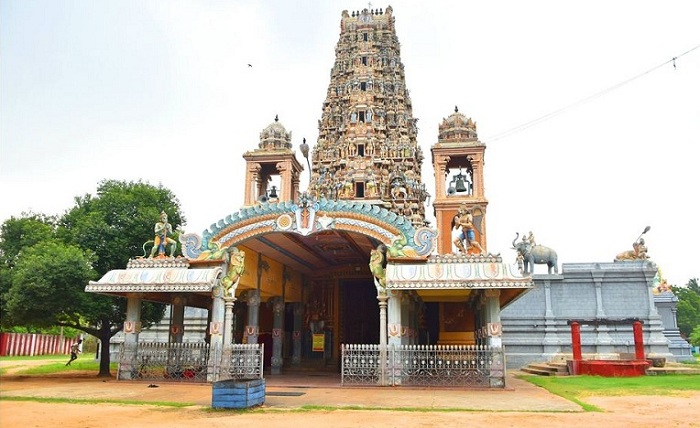
In the ancient times, kings and nobles built temporary resting places along popular routes for the weary travelers to rest or spend the night. This practice continued until the end of British Colonial era in mid-20th century. The Six Pillar Choultry (Aru Kaal Madam in Tamil) is one such structure on the Manipay Road in Jaffna. This Madam is built on a 70cm high platform with six pillars holding the roof and open from all sides. This Madam is always associated with well, Goods store (Sumaitanki – a platform with 2-3 feet height & used to keep the goods carried on the head or shoulders of the traveler & load them back without any assistance), Stone Pillar (Avurancikal- a stone with 2-4 feet & used for the cattle to relieve themselves) and small tank. It’s like a Ambalama(resting place for the people) in Kandiyan Kingdom.

Vannai Vengadesa Varatharaja Perumal Temple
( Religious place )
Location : Jaffna Town
This temple is known as “Thirupaththy in Illankai( Sri Lanka)” . It is a famous Visnu god’s temple and was constructed in 1665.The first grand festival was celebrated in 1878.The annual grand festival is celebrated for 10 days during the month of September.This temple has Rajakoopuram (front tower) and the Kumbhaaabisekam was held in 1978.Some other special festivals such as monthly Egathasi,Ramar Paddabhisekam in March,Krishna Jeyanthi in September,Thiruvonam in April are celebrated in this temple.
Ariyakulam Pond
( Historical Place )
Location : Jaffna Town
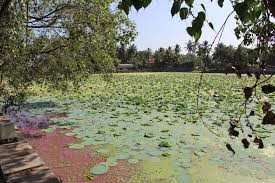
It is a most popular, largest pond and situated near to Naga Vihara in the Jaffna town. It is believed that is associated with historical aspects. The pond has lotus and many residents’ birds visit to this pond. It has recently renovated by Jaffna Municipal Council with funding assistance of private sector for promoting recreational activities. It is considered as major recreational center within the Jaffna town.
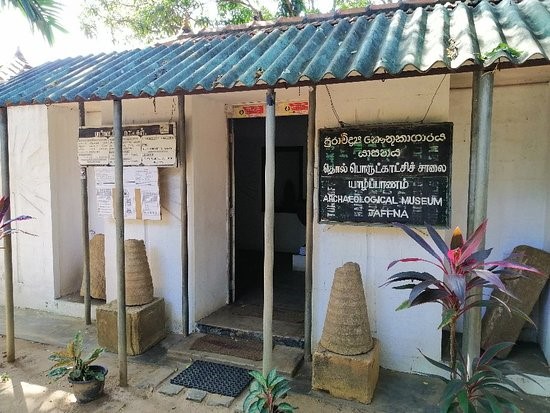
Jaffna Archeological Museum
( Archeological Monument )
Location : Nallur
It is situated at the back of the “Navalar Cultural Hall”in the Navalar Road.The Land was given to museum by Arumuga Navalar Foundation and it was constructed in 1983.Early Museum was established by Nora Twynam near to St.John’s colleage in 1918.Second time, It was established in private building at Second Cross street, Jaffna in 1956. It has archeological evidence such as Hindu, Buddhist, Christian & Islamic temple ruin, sculptures, statues, bronzes, painting and coins. The collections represent from ancient period to colonial period. It is being managed by Department of Archeology.
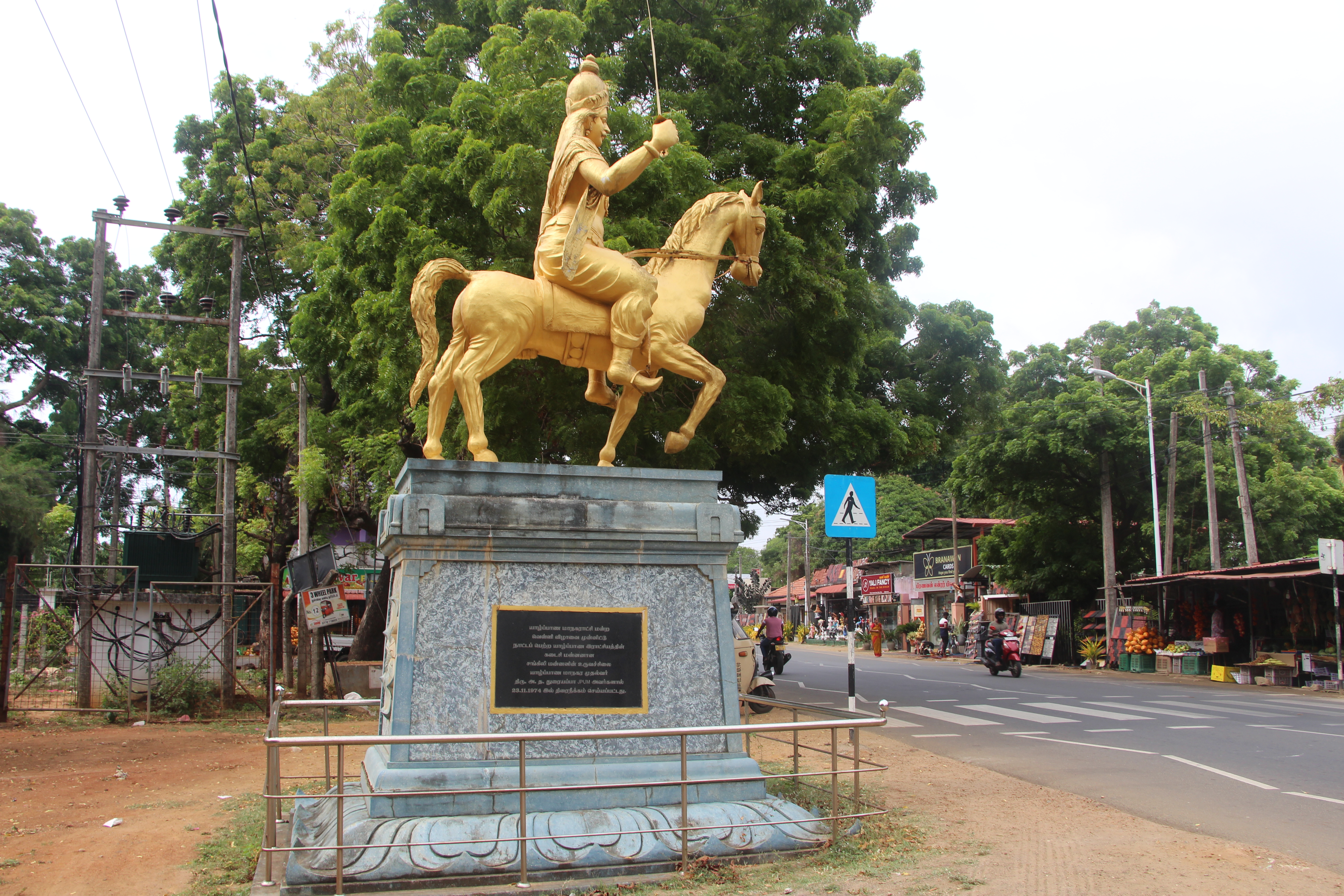
The statue of Tamil King Sangiliyan
( Historical building )
Location : Nallur
It is a symbol of Nallur kingdom. It is belonging to last kingdom of Jaffna Sangiliyan II. He was a son of Sangiliyan I (1519-1561AD).Sangliyan II ascended the throne after the death of king Ethirmannacingam in 1617.he was ousted from throne in 1619 and captured due to anti- Christian activities, collaboration with Kandiyan king and anti-Portuguese measures. The statue was built in 1974 at Muththirai Junction and it was renovated in 2011.It is a landmark of Jaffna Kingdom.
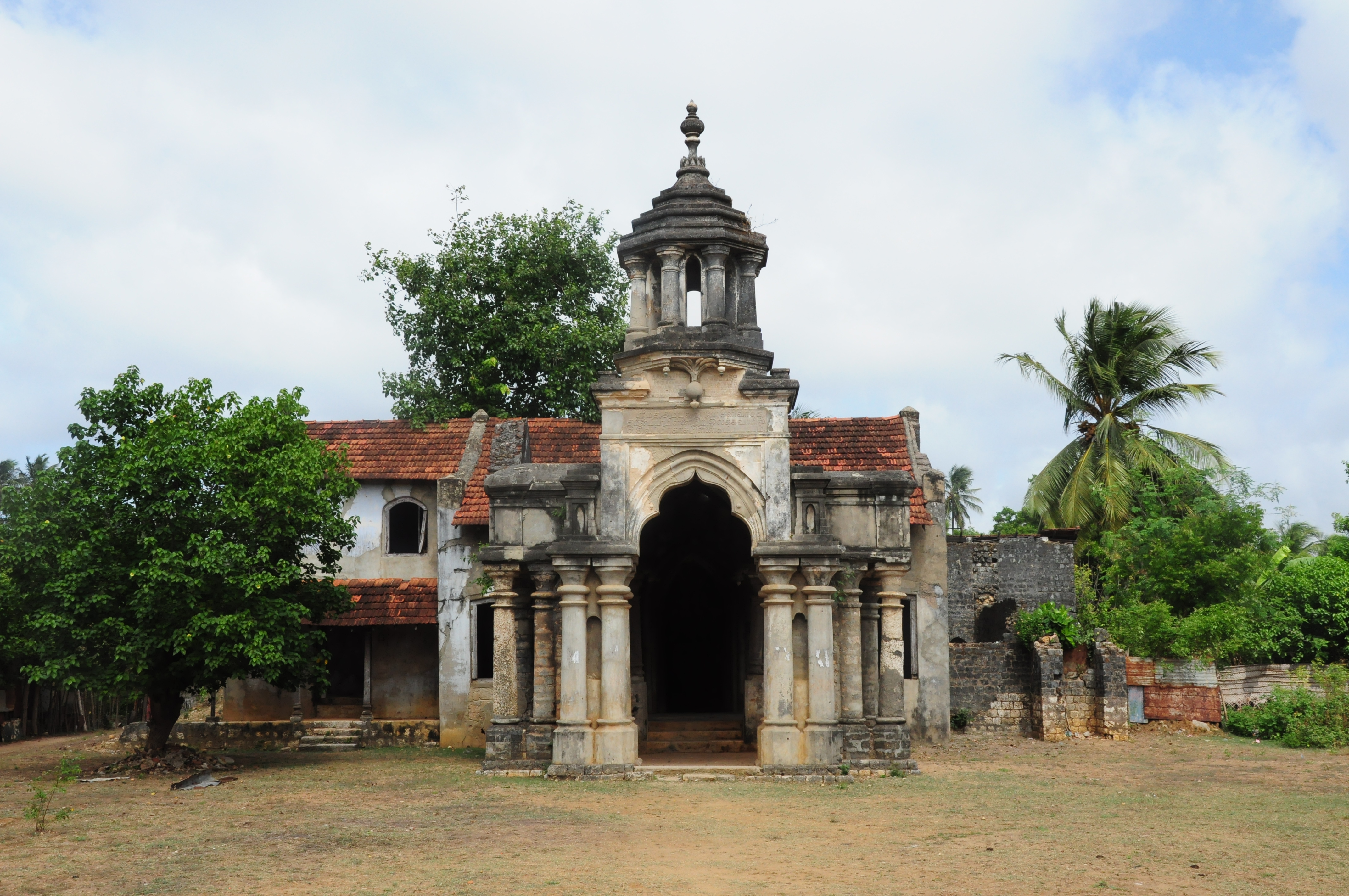
Manthiri Maligai
( Archeological Monument )
Location : Nallur
It is a historically important place, and this palace is associated with the Nallur kingdom. This building has been declared as archaeological monuments. It is believe that to be one of the palaces or residences of a minister of Sangliyan, king of Jaffna, before the fall of the Jaffna kingdom to the Portuguese. Several aspects of European and Dravidian architectural styles can be perceived in this construction. Scholars believed that the inside of this buildings were built by king Paraninerupa Sinkam who ruled in Nallur in the 15th century A. D but according to the inscription on building conforms that it was buil by A.S.Tambiyapilly in 1890. It was used as a government office during the British period. It is situated on the Point Pedro Road near to Nallur Sattanathar Kovil.
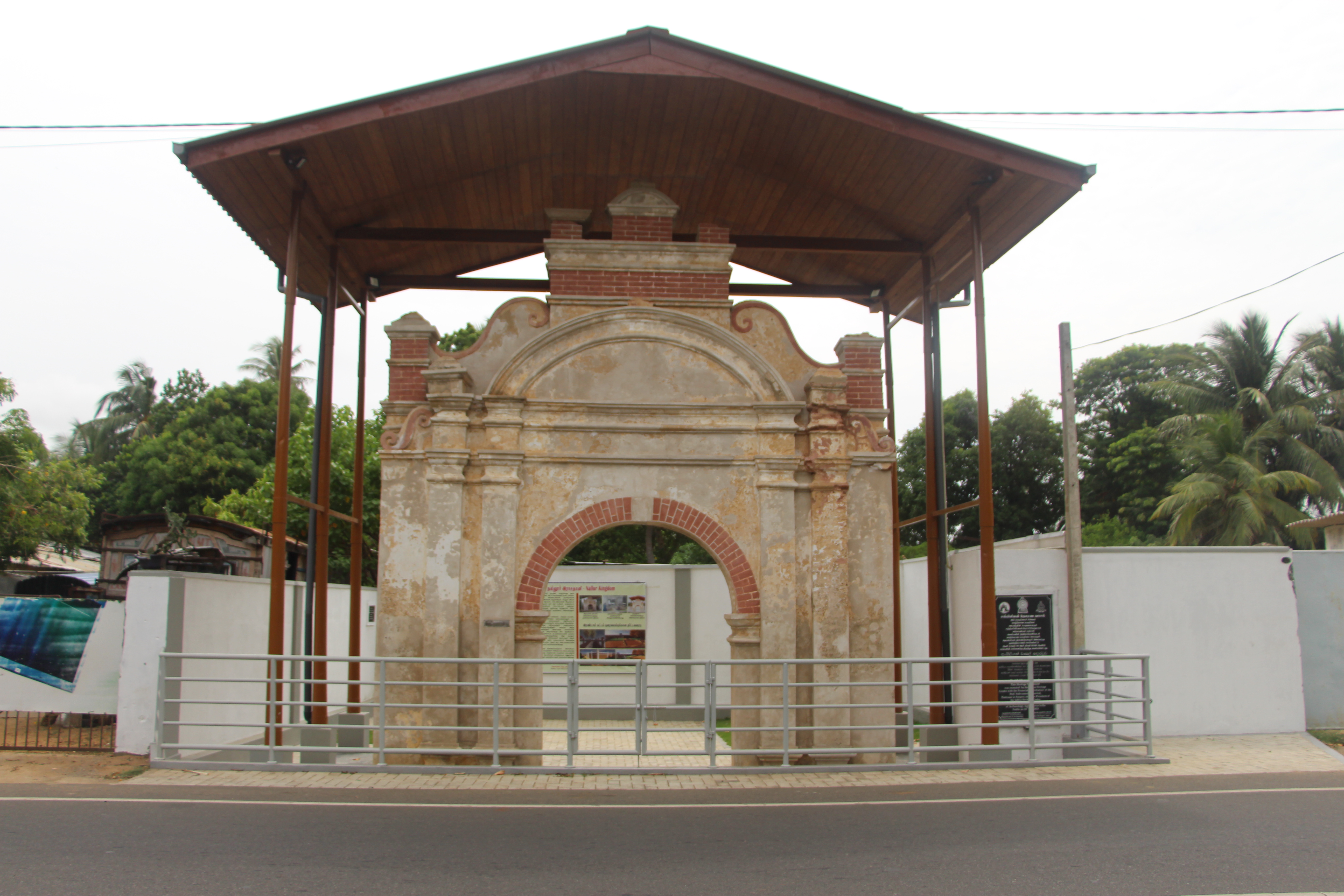
Façade of Manson at Sankilliyan Thooppu
( Historical place & Archeological Monument )
Location : Nallur
This building has been declared as archaeological monuments and it is an ancient facade, and one of the remnants to commemorate the Jaffna kingdom. Its architecture style is related to Dutch colonial architecture and it is situated on the Point Pedro Road close to Manthirimanai.
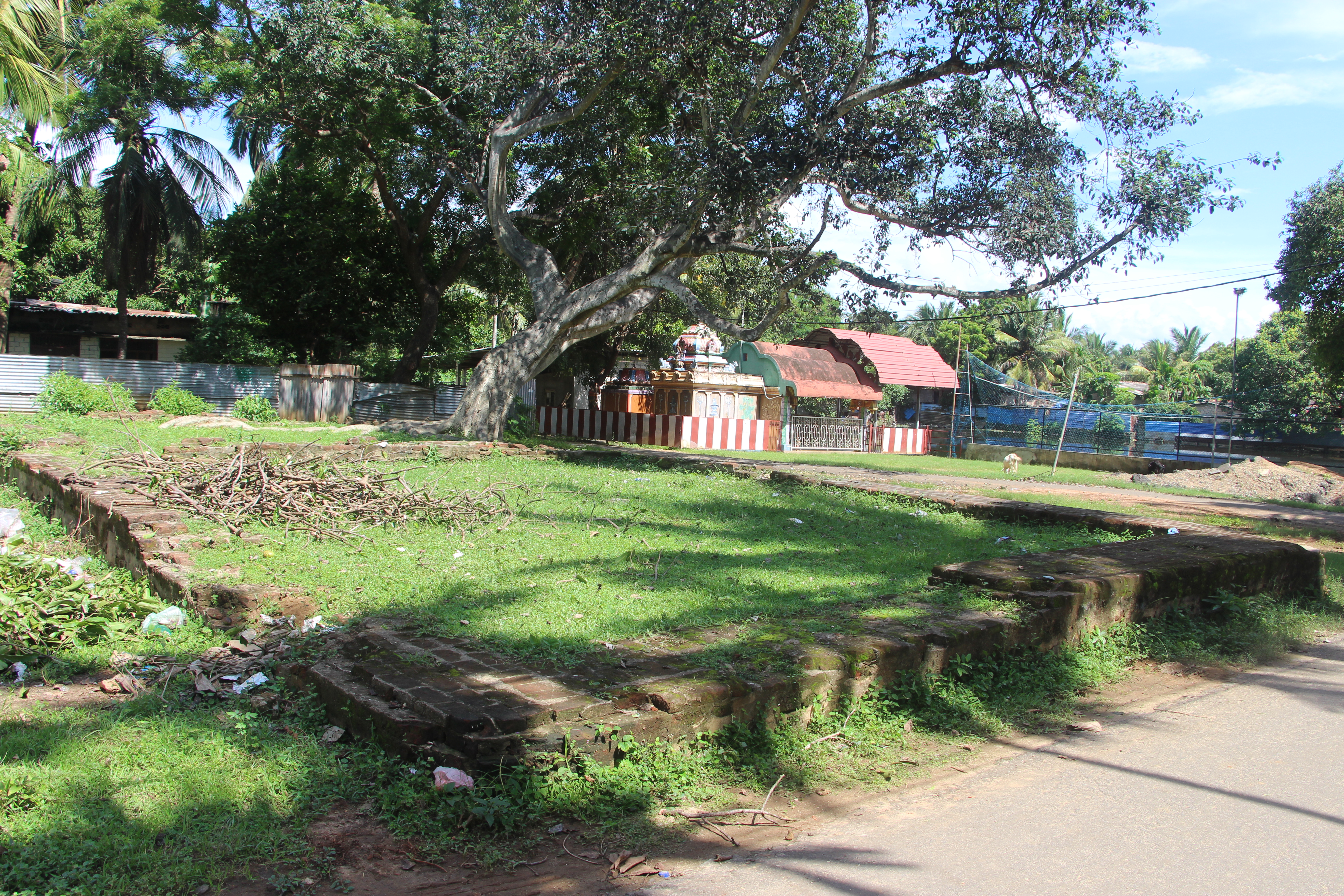
Ruins of foundation of the Sangilliyan Toppu
( Historical place & Archeological Monument )
Location : Nallur
It is considered as another physical remnant of the Jaffna kingdom. This foundation is situated eastern side of the façade of mansion of Sangiliyan palace on the Point Pedro Road and the area has been called as Sangiliyan Toppu for a long period. It is believed that these foundations are associated with Nallur Kingdom and Tamil king. There is a big tank near the foundation.Many history researchers have studied and proved that these evidences were associated with Tamil king Sanliyan period. This foundation has been proclaimed as Archeological monument by Department of Archeology.
Yamuna Ari (Pond)
( Historical place & Archeological Monument )
Location : Nallur
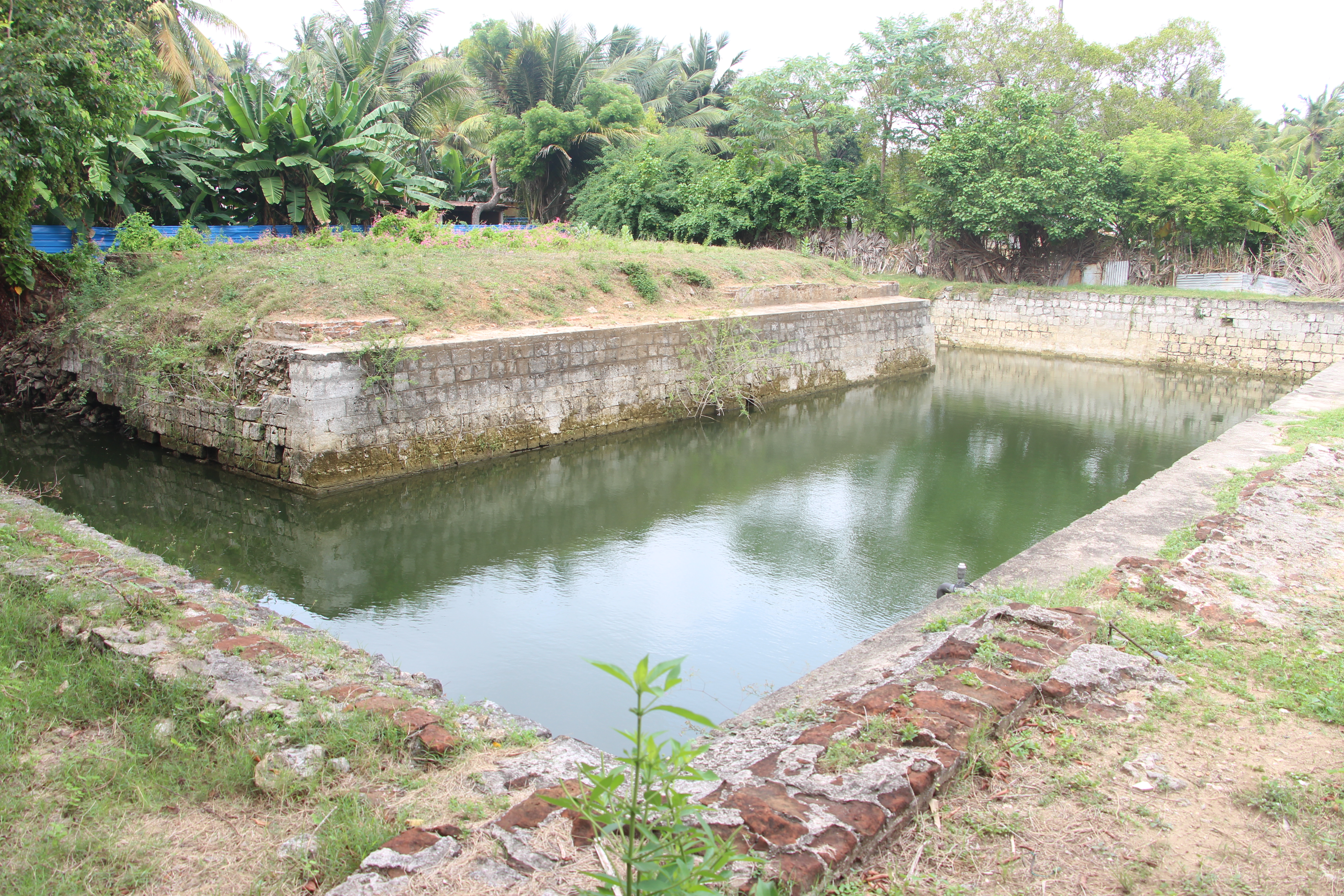
It is a one of the archeological monuments and situated close to Manthirimanai. King Cinkai Ariyan Cekaracacekaran I (1215–1240) the King bringing sacred water from India`s Yamuna River and mixing it with the water in the pond. That is a reason it is called as Yamuna Ari. This pond having the shape of the syllable `pa` in Tamil and like a square shape. It was constructed by using bricks allowing for convenient bathing. It is believed that this pond was used for bathing purposes by Tamil Kings and royal families.in another, it is said that the pond was used for ritual bathing purposes of Nallur Kandasamy deity because the old Kandasamy kovil was situated close to this pond.
St. James Church Nallur
( Religious place )
Location : Nallur
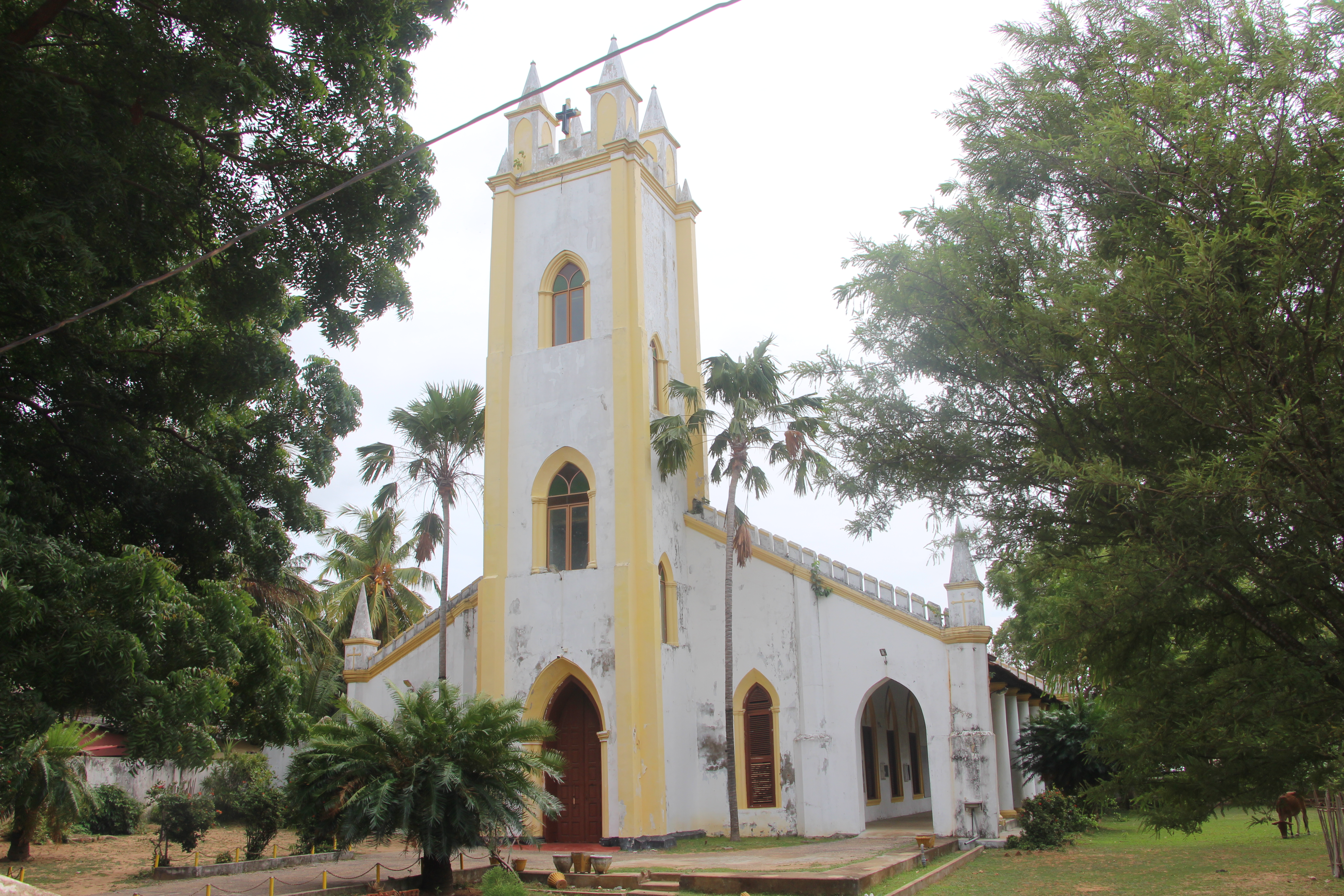
St. James` Church is a Church of Ceylon church located in Nallur. The church was declared as an archaeological protected monument. In 1817 the Anglican Church Mission Society approved the establishment of missions in Ceylon. On 20 December 1817 four clergymen and their wives arrived on board in late June 1818. Among them, Knight went to Jaffna. Knight started his missionary work in 1818 in Nallur. In 1820 Knight bought a mission house in Nallur to conduct regular services. An old, dilapidated Dutch church next to the mission house was handed over to the mission by the government in 1823. is church was the site of the Nallur Kandaswamy Temple before it was destroyed by the Portuguese. After extensive repairs this church was opened to the public for worship on 25 July 1828 (St. James` day). Bishop James Chapman consecrated the church in 1847 and in 1849 a 60 feet tower was added.